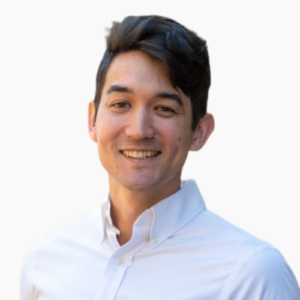
Alexander Taguchi
Director - Machine Learning iBio
Alex Taguchi is Director of Machine Learning at iBio, where he leads the application of artificial intelligence to antibody discovery and development, with a focus on epitope selectivity and developability. Prior to iBio, he held machine learning leadership and scientific roles at RubrYc Therapeutics, where he helped integrate AI and protein engineering into high-throughput selections for antibody discovery. His research spans more than 30 publications across institutions such as MIT, with peer-reviewed work appearing in leading journals such as Science, PNAS, and JACS.
Seminars
- GPCRs are challenging membrane targets to express and purify for antibody drug discovery
- Generative AI can reengineer GPCRs into soluble formats ready for drug discovery
- This technology enables antibody discovery against Amylin Receptor, a next-generation obesity target
AI and machine learning are rapidly becoming embedded within structural biology and drug discovery, but the research community is increasingly asking a more practical question: which approaches genuinely improve SBDD outcomes? With model performance varying by application, training data often limited, and automated structure solution and docking still facing significant challenges, integrating AI effectively requires rigorous validation and close collaboration with experimental structural biology. Join computational scientists, structural biologists, and AI developers as they discuss how to translate AI advances into measurable SBDD improvements by:
- Identifying where AI delivers genuine value across SBDD, evaluating applications beyond protein folding prediction, including structure prediction, cryo-EM processing, molecular design, docking, and experimental data analysis
- Validating AI/ML approaches against real-world experimental data, discussing how independent benchmarking, wet-lab validation, and appropriate performance measures can establish confidence in new models and distinguish useful tools from overpromoted solutions
- Integrating AI with experimental structural biology, exploring how prediction models and experimental methods can complement one another to improve speed, fidelity, resolution, and decision making across the SBDD workflow